If permitted, you should provide color scans of the front and back of your driving license. Note that temporary permits or heavily worn licenses with unreadable information are frequently rejected by automated scanning software. Regulated forex brokers typically prohibit or restrict live‑account registration for several clearly defined categories of people.
Identity Fraud and Synthetic Identities
Today, the process has transitioned from manual document handling to digital ecosystems that prioritize speed, security, and global regulatory alignment. KYC helps identify and monitor clients, making it harder for criminals to use fake identities or hide illegal funds. It enables early detection of suspicious activities and supports cross-border investigations in hubs with large volumes of international transactions. For example, the U.S., UK, Singapore, and EU have different ID checks, risk assessments, and data retention policies. Understand USA KYC and AML requirements, compliance workflows, and how AI-driven solutions improve identity verification and risk monitoring.
- However, ensure the document is from the most recent tax year, as outdated filings may be rejected in favor of more current monthly statements.
- These methods allow businesses to extract and verify customer data directly from government databases, providing a seamless and secure way to validate identities without relying on physical documentation.
- Because crypto transfers can be fast, irreversible, and sometimes hard to trace, strong monitoring becomes even more important.
- EDD typically includes detailed identity verification, KYC, source of funds and source of wealth checks, comprehensive adverse media screening, and scrutiny of complex ownership structures such as UBOs.
- Basic customer due diligence (CDD) is used on most customers as it verifies the identity and assesses the risk of doing business with this particular customer.
- Recommended by the Financial Action Task Force (FATF), risk-based KYC allows firms to balance their compliance obligations in a proportionate, efficient way.
Digital Identity Verification in Banking: How Financial Institutions Are Modernizing KYC
A risk-based approach means the platform assesses each customer’s risk level and applies controls proportionate to that risk. As financial crime incidents continue to rise, proper KYC authentication and risk evaluation help institutions stay protected. Financial institutions should make sure KYC authentication processes are user-friendly while meeting security standards. Automated KYC checks improve onboarding speed, strengthen compliance, and reduce operational risk. The CIP element of KYC also applies to business entities, including trusts, LLPs, and PLCs.
Why do we need an efficient end-to-end KYC process?
While specifics may vary by region, the core elements commonly include identity verification, address confirmation, and checks on financial activities. A key aspect of KYC is Customer Due Diligence (CDD), which involves collecting and evaluating basic customer information to assess potential risks. Transaction monitoring is the process of tracking transactions (such as deposits, transfers, and withdrawals) to detect potential illegal activities like money laundering or terrorist financing. Suspicious transactions are flagged for further investigation, making ongoing monitoring essential to prevent money laundering and other financial crimes. The financial and digital landscape, KYC (Know Your Customer) compliance has become a cornerstone of responsible business practices. It involves verifying the identity of customers to prevent illegal activities such as money laundering, fraud, and identity theft.
Leveraging technology can also streamline the KYC process, making it more efficient and less intrusive for customers. This means that companies can acquire customers in any country in Europe, within an open and homogeneous market of 508 million people, with just one click thanks to QES Multi onboarding in full KYC compliance. See how identity verification fits into a complete KYC and compliance workflow with VOVE ID. While implementation differs by sector, the underlying identity verification principles remain consistent. Well structured systems balance regulatory requirements with user experience and scalability. This lifecycle approach ensures that identity data remains accurate, relevant, and usable across multiple compliance systems.
Improve Customer Communication
Using AI-powered tools, organizations can perform identity verification, KYC, document checks, and real-time AML screening as part of a seamless kyc verification process. KYC (Know Your Customer) is the kyc process businesses use to verify the identity of customers during onboarding and throughout the customer lifecycle. The know your customer process ensures that individuals are who they claim to be by using identity verification kyc, fxverge reputation document checks, and risk assessment methods as part of a secure customer onboarding process.
Improving Customers Bank Customer Service for Better Results
As a regular investor or customer in the financial ecosystem, we have likely heard of the term "Know Your Customer" or KYC. Let us break it down in simple terms to explore its importance and understand how smooth the process has become. Learn all about aliexpress customs with this easy guide to importing, duties, taxes, and steps to avoid delays or surprises when shipping globally.
How to Spot Fake KYC Verification Requests
Many FIs begin their KYC procedures by collecting basic customer data and information, ideally using electronic identity verification. Regulations change, businesses change, and people and their circumstances change. Therefore, effective KYC cannot rely on point-in-time information used during onboarding. To protect themselves from non-compliance and reputational damage, banks must implement a holistic and continuous KYC process.
eKYC in action – Transforming identity verification
Beyond fines, non-compliance can trigger loss of banking relationships, reputational damage, and in serious cases, criminal prosecution of compliance officers and executives. Commonly accepted IDs include passports, driver’s licenses, national ID cards, and residence permits. Acceptance depends on local regulations and the verification provider’s document coverage. Shufti integrates all of these into a single workflow that businesses deploy through APIs or SDKs, reducing onboarding times without compromising accuracy. These regimes are based on the recommendations of the Financial Action Task Force (FATF), a pan-government organization formed to fight money laundering, terrorism, and proliferation financing. Use encrypted digital KYC processes with role-based access and auditable reporting.
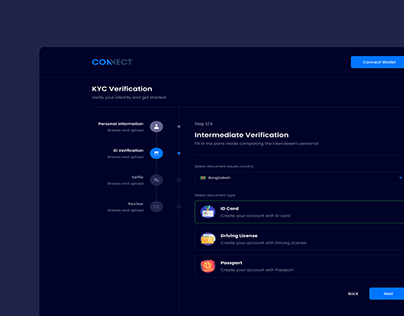
Manual KYC checks are prone to human error from fatigue or lack of training, making them inefficient. Modern KYC technology uses biometrics to detect spoofing attempts (like masks) and analyzes documents for alterations, resulting in a 99.8% success rate. In the background of the process, the client’s data is checked against numerous ID registries to confirm its authenticity and KYC compliance. Understanding these key laws helps organizations align with global compliance standards and avoid costly penalties.
Best Practices for KYC Verification Procedures
Businesses should regularly review customer transactions and have clear protocols for reporting any unusual behavior to authorities. Crypto businesses are considered to be money services businesses (MSBs) and need to implement both KYC verification and AML measures. This means adhering to CIP requirements, reporting obligations, and recordkeeping procedures. Platforms handling fiat-to-crypto transactions also implement KYC verification. For example, accepting crypto payments introduces more money laundering risks than standard transactions. As a result, companies need to monitor their internal controls and transactions to assess internal and external risks.
Understanding Web3 KYC for Secure Online Identity
Customers typically provide this information through digital forms or direct submissions during onboarding. Not only brokers use KYC, the procedure is also widely used by banks, and any financial companies that provide insurance or credit and require appropriate due diligence. KYC processes are also utilized by companies for the purpose of ensuring their proposed customers, agents, consultants, or distributors are anti-bribery compliant. Join hundreds of businesses that successfully integrated iDenfy in their processes and saved money on failed verifications. The banking and financial industries have the most rigorous requirements, which is understandable given the nature of their business. Perpetual KYC helps keep awareness of ongoing risks through thorough ongoing CDD procedures to control and maintain compliance.